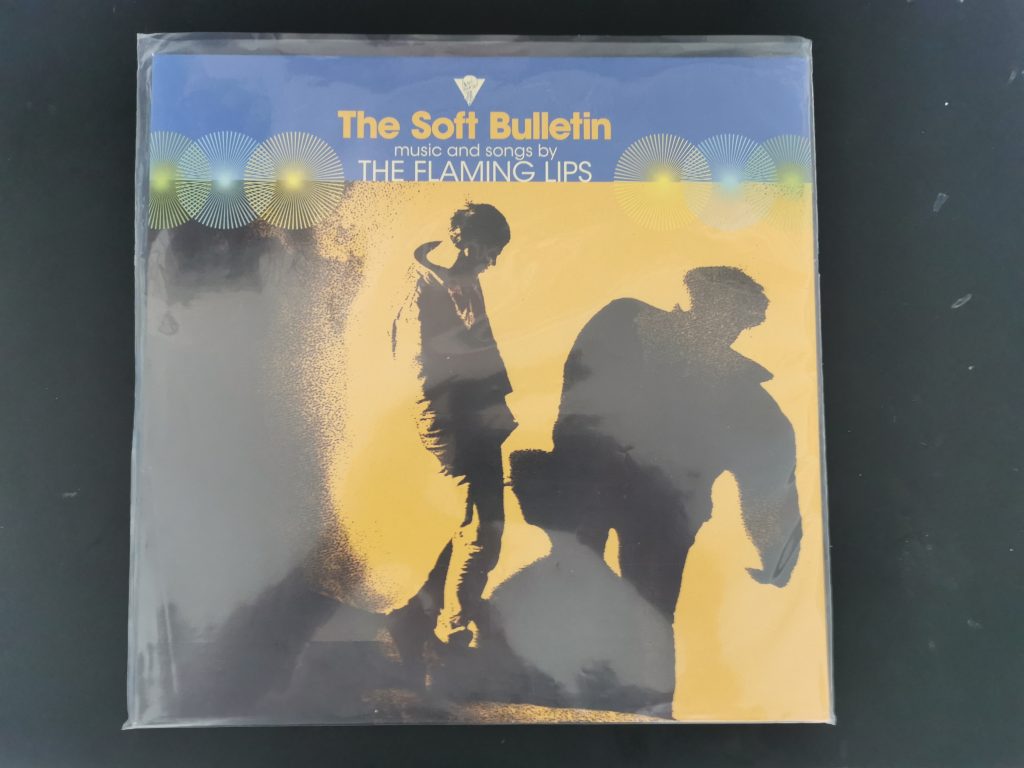
Keeping vinyl clean
After a vinyl record has been cleaned, maintaining its condition is principally a matter of proper handling and storage. The primary goals are to prevent dust accumulation, reduce static, and avoid physical damage.
Listed below are some simple practical options and practices that we recommend to help keep your vinyl records in top condition.
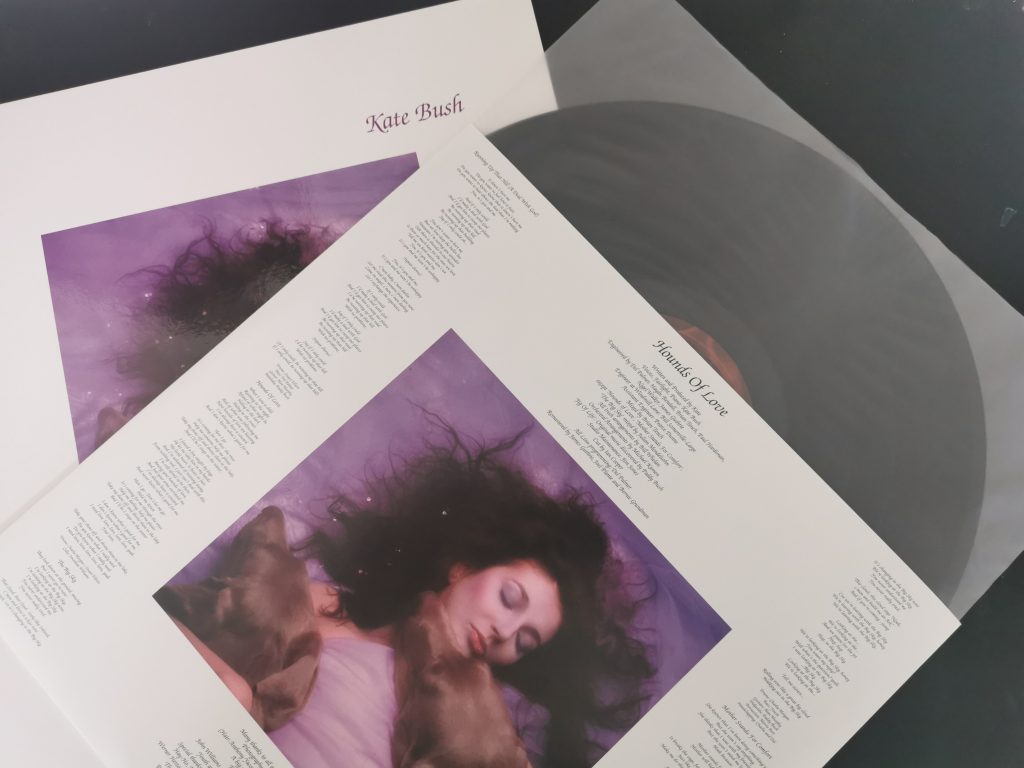
Upgrade your inner sleeves
The most effective and important step that you can take is to replace (or line) paper or cardboard inner sleeves with archival-quality anti-static sleeves. All vinyl records deep cleaned or anti-static treated by Revivinyl are returned in a new high-density polyethylene (HDPE) inner sleeve.
Why it works: Paper sleeves can shed small fibres and create a static charge every time you slide a record in and out, which attracts dust. Anti-static sleeves made from HDPE, polypropylene, or a combination (often called “rice paper”) are specifically designed to eliminate static and are lint-free.
Recommendation: Replace paper or cardboard inner sleeves with anti-static sleeves. If you wish to retain the original inner sleeve, then look for sleeves made from HDPE to line it.
Handle records with care
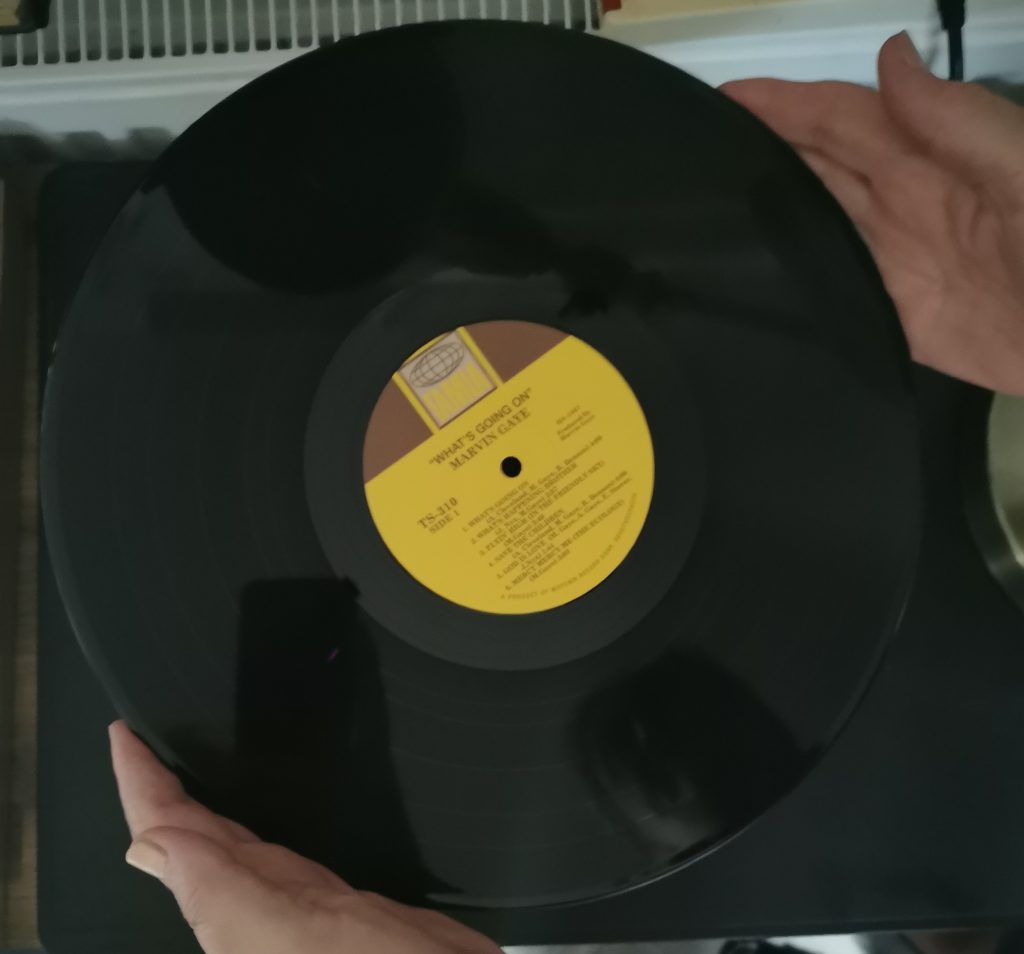
Proper handling is a simple but crucial habit that prevents the transfer of dirt and oils. Even the cleanest fingers can leave behind oils and smudges on the record’s grooves, so avoiding manual contact with the playing surface is important.
Why it works: The oils from your fingers leave a residue in the record’s grooves that can attract dust, debris, and even become a breeding ground for mould.
Recommendation: Always hold the record by the outer edges and the label. Avoid touching the playing surface with your fingers.
Manually clean records
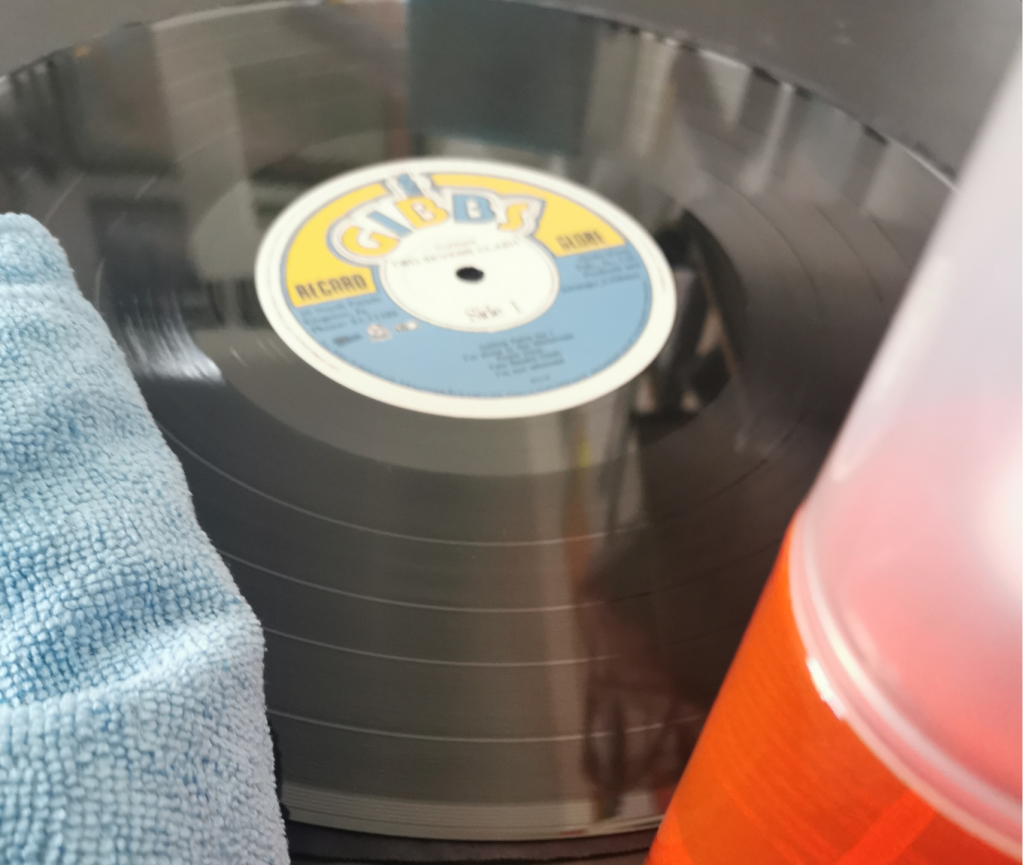
Another important step that you can take to maintain your records is to manually clean them using a specialist record cleaning fluid and a microfibre cloth. This simple process removes a surprising amount of the dust and grime that can accumulate on the vinyl surface.
Why it works: Over time, records naturally pick up dust and airborne particles. Record cleaning fluids are specially formulated to break down and lift away these contaminants without damaging the vinyl. When used in conjunction with a high-quality microfibre cloth, which traps and holds onto tiny particles, the process cleans the grooves effectively, resulting in a quieter, clearer sound.
Recommendation: For a new record, a quick manual clean before the first play is a good habit. For records in regular rotation, we recommend that whenever you notice a decline in sound quality or if a record has visible fingerprints, smudges or dust, then a manual clean is due.
Use an anti-static carbon fibre brush
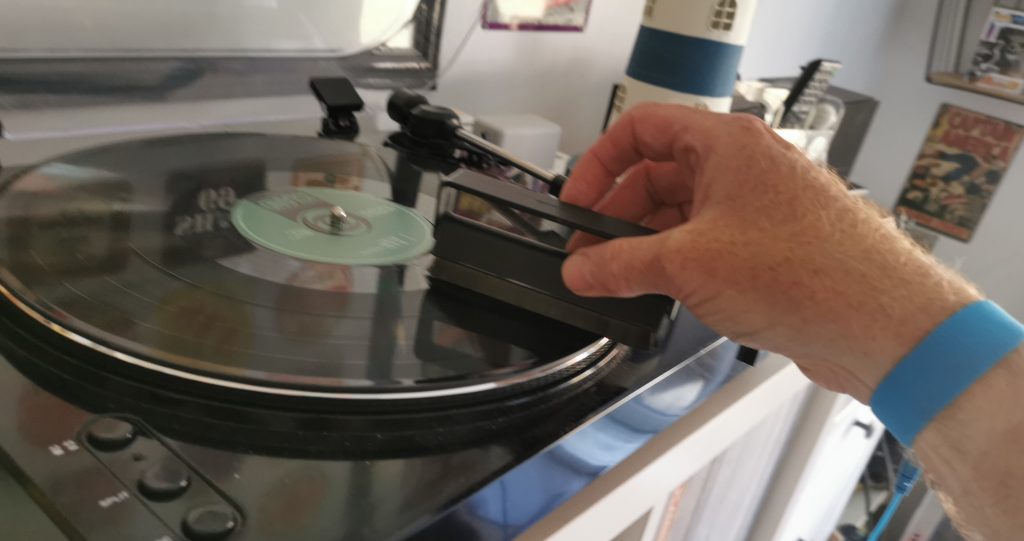
A quick, pre-play brushing routine is a fundamental habit for every record collector.
Why it works: An anti-static carbon fibre brush sweeps away surface dust and, more importantly, dissipates the static charge that attracts dust particles. Use it immediately before (and preferably after) playing a record.
Recommendation: Gently brush the record from the centre out to the edge while it’s on the turntable. Don’t press hard; the goal is to sweep away dust and neutralise the static.
Store records vertically and in a stable environment.
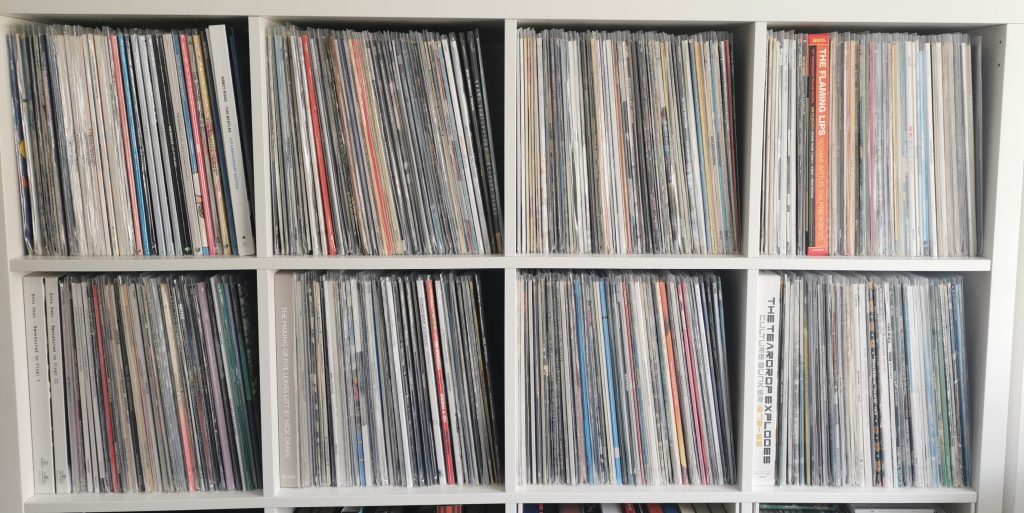
How you store records is as important as what you store them in.
Why it works: Storing records horizontally can warp the vinyl over time due to uneven pressure. A stable, upright storage position prevents this. The environment itself also plays a key role. Extreme temperatures and humidity can damage the vinyl and the cardboard sleeves.
Recommendation:
Store all records vertically, like books on a shelf. Keep them away from heat sources – radiators, direct sunlight – and high-humidity areas such as kitchens. The ideal environment is cool and dry, with a stable temperature and a relative humidity around 35-40%. Use sturdy dividers to ensure records are supported and not leaning at an angle greater than 20° from the vertical.
Add outer sleeves
An outer sleeve protects the entire record jacket and its contents from the elements.
Why it works: A plastic outer sleeve acts as a physical barrier against dust, moisture, and general wear and tear of the cardboard jacket. This prevents dust from entering the inner sleeve and settling on the record itself.
Recommendation: Use a clear, archival-quality polypropylene or polyethylene outer sleeve. For added protection, we also suggest that the record cover is inserted into the outer sleeve from the top (i.e. the cover opening is at right-angles to the sleeve opening), which seals off the inner sleeve from the outside environment.